
Understanding and specifying curtain walls for commercial trade projects
April 7, 2026
Quick answer: A curtain wall is a non-load-bearing glazed façade that hangs from a building’s structural frame. It carries no floor or roof loads, protects against wind, rain and heat loss, and defines the visual character of modern commercial buildings, letting in plenty of natural light. If you are a trade installer looking to move into higher-margin commercial work, understanding how to specify these systems correctly is the difference between winning contracts and losing them.
What are curtain walls?
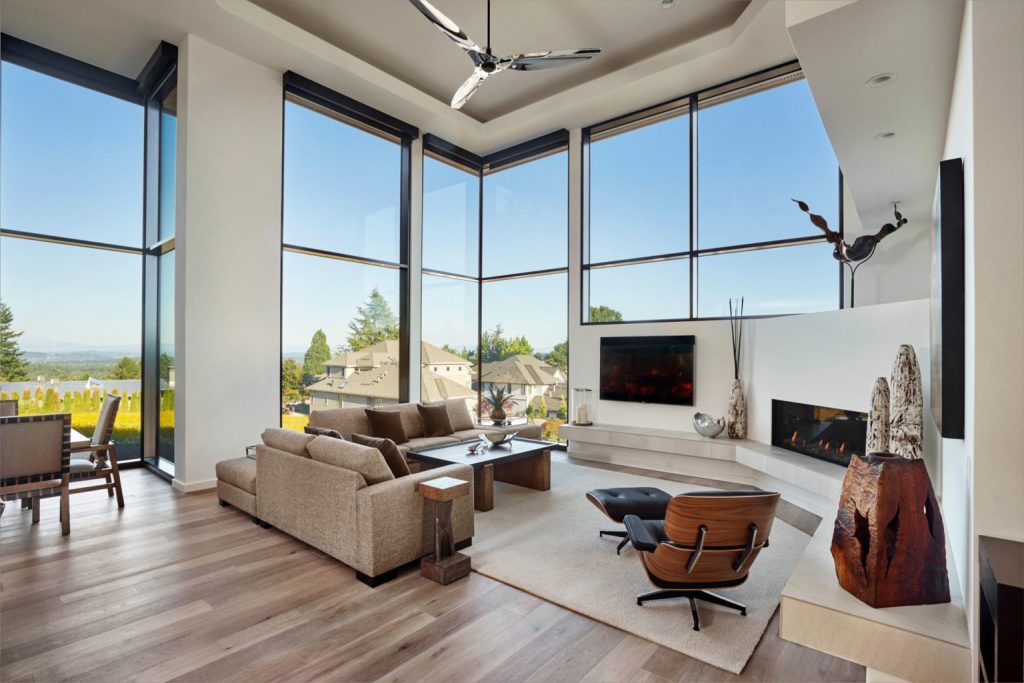
Curtain walls are non-structural exterior building walls. They protect the interior from the elements but, because they carry no structural load beyond their own dead-load weight, they can be made from lightweight materials. Rather than bearing the weight of the floors above, a curtain wall transfers lateral wind loads to the main building’s structure through connections at floors or columns.
The definition matters when you start pricing up a commercial job. A standard window or door fills an opening in a load-bearing wall. A curtain wall system spans between structural floors and creates a continuous glazed skin that can replace entire sections of solid wall.
How curtain walling differs from standard commercial glazing
If you have specified storefront glazing before, the jump to curtain walling is less dramatic than it looks, but the performance demands are significantly higher.
| Feature | Storefront glazing | Curtain walling |
|---|---|---|
| Typical height | Up to 3–4m | Multiple floors, often 10m+ |
| Load transfer | Through cill to floor | Through mullion anchors to slab |
| Thermal break | Optional | Essential at commercial scale |
| Structural movement | Minimal allowance | Must accommodate building sway and thermal expansion |
| Performance standard | General fenestration | BS EN 13830 |
Unlike storefront systems, curtain wall systems are engineered to span multiple floors on a building design, such as office buildings, and account for building sway, water infiltration, thermal expansion and contraction, seismic movement and thermal efficiency. Getting this right is where specialist knowledge pays off.
The anatomy of a curtain wall system
Understanding the component parts helps when you are specifying, quoting and ordering.
Mullions
Vertical aluminium extrusions that form the primary structural spine of the system. In stick systems, vertical mullions typically run past two floors, with a combined gravity and lateral anchor on one floor and a separate lateral anchor on the other. The depth and inertia rating of the mullion determines how much wind load the system can handle.
Transoms
Horizontal members that connect mullions and carry the weight of glass panels vertically. The transom profile determines the maximum glass panel weight the system can support. The Reynaers ConceptWall 50, which Dekko supplies, supports glass panels up to 700 kg depending on configuration – a significant capacity that opens up large-format architectural glazing on commercial projects.
Infill panels
Glass is by far the most common infill. For commercial construction, insulated glass units (IGUs) are standard, typically double or triple glazed. Spandrel panels cover the floor slab edges between glazed zones and are often made of opaque glass, aluminium or composite.
Pressure plates and gaskets
These secure the glazing to the frame. Dry-glazed systems use EPDM gaskets set into undercut grooves in the mullion and transom. The pressure plate compresses the gasket to form the primary weather seal.
Anchor connections
The entire dead and live load of the curtain wall is transferred to the building structure through anchors that connect the mullions to the slab. These connections must allow for vertical settlement and horizontal movement while maintaining a positive structural tie.

Why does a thermal break in a curtain wall matter?
Aluminium is an excellent structural material but a poor thermal insulator. Heat conducts directly through the metal frame, creating cold bridging, condensation risk and poor energy performance. A thermal break is a low-conductivity material inserted between the inner and outer sections of the aluminium profile, interrupting the thermal pathway.
The thermal performance of a curtain wall system depends on the frame, glazing, thermal breaks, installation detailing and all other components working together as an assembled unit. A U-value is a whole-system figure, not just a glass specification.
Under UK Building Regulations, Approved Document L sets maximum U-values for building elements including curtain walling in both new-build and refurbishment projects. For new commercial buildings, specifiers target U-values that comply with Part L Volume 2 (buildings other than dwellings). Additionally, curtain walling must contribute to the building envelope’s air tightness.
The Reynaers CW 50 system that Dekko fabricates and supplies includes different thermal variants to comply with specified levels of thermal insulation, with the high-insulation (HI) variant achieving energy efficiency up to Passive House certification levels. This makes it applicable even for low-energy and near-zero-carbon commercial projects.
UK standards and compliance for curtain walling projects
Trade installers expanding into commercial work need to understand the regulatory framework before they start specifying. A missed standard on a commercial envelope can result in failed inspections, remedial costs, or liability issues that simply do not arise on domestic work.
BS EN 13830
The primary UK and European standard for curtain walling products. It sets out requirements for design, testing and performance, ensuring that curtain wall systems meet expected levels of structural strength, weather resistance and thermal and acoustic performance.
BS EN 12155 and BS EN 12154
Standards for testing the water tightness of curtain walling. Water tightness testing involves applying uniform water spray at increasing air pressure until water penetrates the system.
Approved Document L
Sets maximum U-values for curtain walling in new-build and refurbishment projects. Both volumes cover limiting U-values for glazed building elements. Designers must meet or exceed the notional benchmark figures to achieve overall energy compliance.
Approved Document F
Curtain walling systems must provide adequate ventilation. This can include trickle ventilators integrated within the framing for background ventilation, operable panels for purge ventilation, or mechanical systems where natural ventilation is insufficient.
Approved Document B (fire safety)
Firestopping at the perimeter slab edge is essential to slow the passage of fire and combustion gases between floors. Spandrel areas must include non-combustible insulation at the interior face of the curtain wall. This is not optional and forms a continuation of the fire-resistance rating of the floor slab.
CWCT (Centre for Window and Cladding Technology) guidance
Compliance with CWCT Standards is not legally required but provides professional confidence that the curtain wall system will deliver the required performance in terms of structural integrity, weather resistance and thermal efficiency. Many main contractors and specifiers require it regardless.
Why Dekko is the right supply partner for curtain wall projects
Dekko has been manufacturing and supplying high-performance aluminium fenestration from its Lancashire factory since 2008, and has grown to become one of the UK’s leading trade suppliers. Since 2022, Dekko has been part of Inwido, Europe’s leading window group, with 35 business units and approximately 4,700 employees across twelve countries.
There are various types of curtain wall systems and Dekko supplies the Reynaers Concept Wall 50 (CW 50) system. This is a stick curtain wall façade and roof system engineered for unlimited design freedom and exceptional performance. Dekko added the CW 50 to its portfolio to give trade installer customers access to a system that brings design visions to life while delivering excellent thermal performance.
Key CW 50 technical capabilities:
Visible interior face width of just 50mm for a sleek, minimal profile
Glass panel support capacity up to 700kg depending on configuration
Available in standard, high-insulation (HI) and Passive House certified variants
Triple glazing compatibility for low-energy and near-zero-carbon projects
Fire-resistant (FP) variant available for projects requiring compartmentalisation
Reinforced profile resisting physical attack, with concealed fixings and advanced forced-entry-resistant glazing options
Available in hundreds of colours with matt, gloss or metallic finishes, plus woodgrain effect options
CE Marking compliant with BS EN 13830 for curtain walls and BS EN 14351-1 for windows and doors
The system also accommodates integrated opening types including parallel opening windows, top-hung vents, turn-and-tilt windows and flush roof vents, allowing the façade to meet Part F ventilation requirements without compromising the clean exterior line.
Dekko fabricates all products at its state-of-the-art 80,000 sq ft factory in Lancashire, and for larger-scale projects the CW 50 is a natural extension of its aluminium window and door range.
Ready to add curtain walling to your commercial offer?
Dekko works with trade installers across the UK who are expanding their commercial capability. Whether you are quoting your first curtain wall project or looking for a more reliable supply chain for an established commercial operation, Dekko’s technical team can support you from specification through to delivery.
Visit the Dekko curtain walling page to learn more about the Reynaers CW 50 system. To discuss a project or request a quote, contact the Dekko team on 0161 406 0055, visit the trade counter in Ashton-Under-Lyne or the Swindon trade counter, or get in touch online.











Nationwide delivery in the UK
From our state-of-the-art factory in Lancashire, our products are transported to installers across the UK. We strive to meet all delivery deadlines to ensure our customers are never delayed. They stock an extensive range of PVCu and ancillary products to give installers easy and convenient access to all the necessary hardware.
Contact Us